

AI can improve efficiency, but it cannot replace the human expertise needed to define intended behavior, uncover gaps, and reduce implementation risk before failure gets faster.
At Critical Logic AI, we help organizations implement business systems with uncompromising quality.
Our approach — Intelligent Quality Management (IQM) — centers on two fundamental principles: establishing clear Intended Behavior (IB) from the outset and rigorously verifying that delivered systems fulfill business requirements. This methodology reduces implementation risk while ensuring projects stay within realistic budgets and schedules.
As AI capabilities rapidly evolve, we’re strategically evaluating how these technologies can enhance — not replace — the critical human expertise that drives successful system implementations. This document outlines our position on AI integration within the IQM framework.
Most enterprise failures don’t happen because testing was insufficient. They happen because what was built didn’t match what the business intended. AI can accelerate testing — but if intent is flawed, speed only accelerates failure.
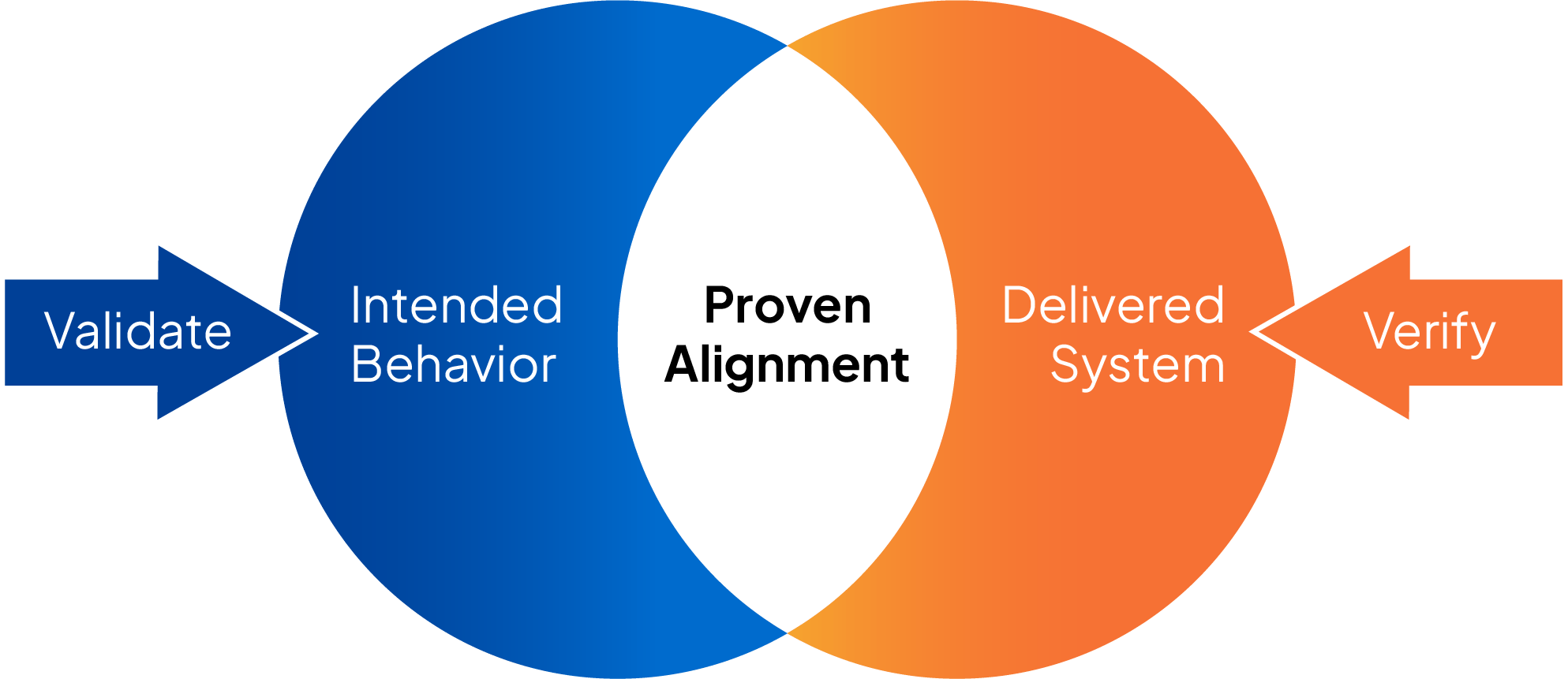
Critical Areas of Quality
In the simplest view, quality in system implementation depends on two key concepts, Validation and Verification. It is essential to clearly define the Intended Behavior (IB) so it can be Validated by stakeholders and drive implementation. Equally important is to Verify the implementation against the IB.
Defining Intended Behavior: Where AI Enhances Human Expertise
The Foundation: Early Clarity
Successful implementations require crystal-clear Intended Behavior (IB) documentation early in the project lifecycle. This demands comprehensive business analysis and proper documentation shared across all team members — from technical teams to SQA professionals. IB artifacts take many forms: process flows, workflows, data flow diagrams, user stories, use cases, prototypes and various models.
AI’s Role and Limitations
AI tools can generate or enhance many IB artifacts, offering significant value in document clarification and complexity summarization. However, critical limitations exist. The complete IB landscape for any business system is inherently complex and diverse, incorporating extensive domain knowledge held by individuals across the organization. Much of this information is proprietary, contextually unique or exists only in human minds — knowledge unavailable to AI systems.
This creates a fundamental challenge: identifying gaps and ambiguities in IB requires deep contextual understanding — an area where AI currently underperforms. While AI excels at pattern recognition and synthesis of explicit information, it struggles with the implicit knowledge and organizational context essential to comprehensive IB documentation.
The Path Forward
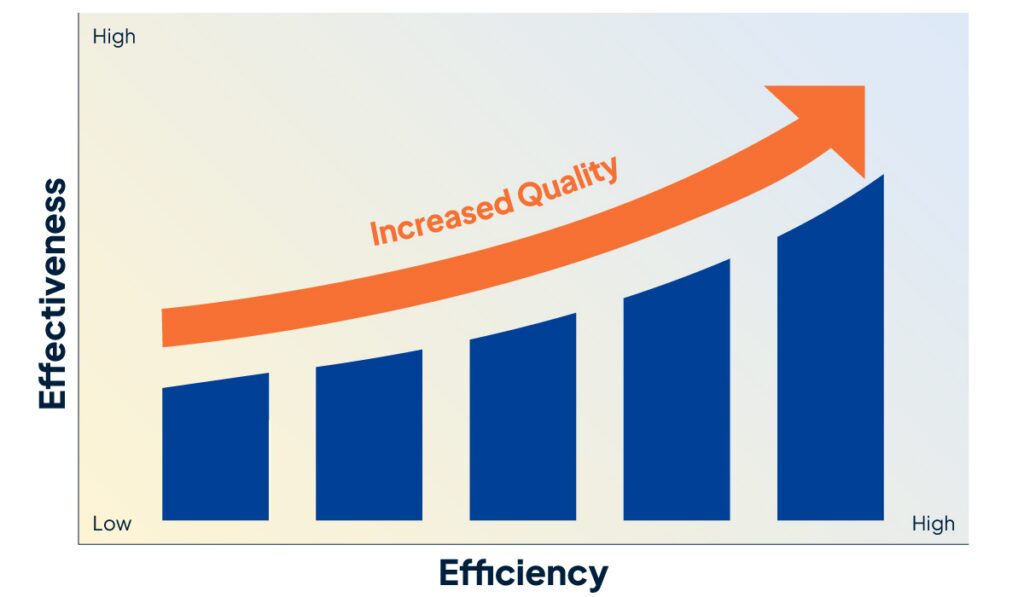
To effectively integrate AI into IB development, project analysts must become expert practitioners of AI tools, understanding both their capabilities and constraints. When properly leveraged by skilled professionals, AI can meaningfully improve both the effectiveness and efficiency of documenting business system Intended Behavior.
Verification: The Should-Do vs. Does-Do Distinction
The Testing Foundation
Effective verification begins with testable IB documentation. All test plans, test cases, test data and defect reports must trace directly back to specific IB elements. This traceability enables the critical distinction between Should-Do and Does-Do testing approaches.
The Does-Do Trap
Many AI testing tools focus on observing system behavior — the Does-Do approach. These tools generate test cases by examining what the system actually does. While this improves test creation efficiency, it fundamentally compromises effectiveness. Does-Do testing inherently validates only implemented functionality, potentially missing requirements that were never built. If 5% of critical requirements are never implemented, Does-Do testing can still report 100% coverage. That illusion of completeness is one of the most dangerous risks in modern software delivery. Additionally, it requires a functional system, pushing testing activities late into the implementation timeline when defects are most expensive to address.
The Should-Do Advantage
The Should-Do approach generates tests directly from IB components — what the system should do. This methodology delivers multiple strategic advantages. Testing can begin much earlier in the project lifecycle, independent of system functionality. In Workforce, payroll and regulatory-driven systems, delayed defect discovery can trigger audit findings, wage claims or contract disputes. Early Should-Do testing reduces that exposure before configuration becomes operational reality. It establishes clear traceability from tests back to requirements, enabling precise coverage measurement and quality assessment. Perhaps most importantly, it identifies gaps where the delivered system cannot be tested against stated requirements — revealing missing functionality before deployment.
AI in Should-Do Testing
Applying AI to Should-Do testing presents unique challenges. IB documentation often spans diverse artifact types — user stories, data maps, data flows, UI standards, process flows — requiring synthesis across multiple sources to design comprehensive verification steps. While AI and advanced testing technologies like model-based testing can generate tests from IB components, achieving full coverage typically requires significant human interaction and expertise. The complexity of mapping diverse IB artifacts to testable transactions demands skilled practitioners who understand both the business domain and testing methodologies. In practice, AI can generate hundreds of potential test permutations from structured models in minutes. But determining which scenarios represent true operational risk — and which are theoretical edge cases — requires experienced human judgment.
That division of labor is intentional.
Our Strategic Position
Critical Logic embraces AI technologies as powerful tools that augment human expertise in IQM. We recognize AI’s capacity to enhance both efficiency and effectiveness in documenting IB and designing verification strategies. However, we remain committed to the principle that successful system implementations require deep domain expertise, contextual understanding and rigorous analytical thinking — capabilities that remain fundamentally human.
AI does not eliminate the need for disciplined quality management. It amplifies it.
Organizations that combine structured IB with AI acceleration move faster — and with fewer surprises — than those relying on automation alone.
That is the competitive advantage we help our clients build.